8(a) is a Cornerstone Federal Program Spanning Multiple Administrations
The 8(a) program’s origins span several presidencies:
- Dwight D. Eisenhower was president when the Small Business Development Act was signed, which laid the initial groundwork for the SBA’s authority, though not explicitly the 8(a) program as we know it today.
- Lyndon B. Johnson and Richard Nixon laid more specific foundations for the program, with Johnson establishing programs that used the SBA’s Section 8(a) authority in a small-scale way, and Nixon focusing more on minority-owned small businesses.
- Jimmy Carter was president in 1978 when the explicit statutory authority for the 8(a) Business Development program, in its more recognized form, was established through amendments to Section 8(a) of the Small Business Act.
Congress Created 8(a) as Part of a Strategic Vision
Congress created the 8(a) program to combat historical and systemic barriers that prevented socially and economically disadvantaged small businesses from securing federal contracts. Stemming from the Civil Rights Movement, the program aimed to level the playing field by addressing discrimination and inequality in access to capital and market opportunities. Beyond simply awarding contracts, the 8(a) program provides crucial business development support, including contracting preferences, mentorship, and training, with the goal of helping these firms build capacity and ultimately thrive independently in the competitive marketplace. Implicit in this design was the expectation that the success of these businesses would also generate jobs, wealth, and serve as role models, thereby benefiting the communities in which they were located. The 1978 amendments to the Small Business Act solidified this commitment, giving the program its formal statutory authority.
The 8(a) Program Benefits: Cut Red-Tape, Give Preference, Enhance Capabilities
Sole Source Contracts
Set-aside Contracts
Joint Ventures
8(a) Certification Key Features
- This small business development program enables minority-owned businesses to obtain business support from the SBA. Under the 8(a) program, small businesses can be introduced by the SBA to contract directly with federal agencies that need qualified 8(a) contractors to meet their congressional budgetary guidelines for spending.
- The program gives 8(a) firms 9 years of preference in federal contracting to overcome prior years in which they suffered from racial, ethnic, gender, geographical or disability bias.
- The 8(a) certification and business development program consists of two phases over the 9-year eligibility period. Phase 1: 4-year “Development Stage” followed by a Phase 2: 5 -year “Transitional Stage”. During the Transitional Stage, the firm is required to take steps to ensure its survivability once it graduates from the 8(a) program.
8(a) Certification By Design Will Grow Your Business
The AVERAGE 8(a) firm has over $5MM per year in Federal Contracts.
What affects your sales numbers are these seven factors:
- Industry
- Your Firm’s Capabilities
- Geographical Location
- Partnerships (JV/Mentor)
- Marketing Execution: Skill, Plan and Effort
- Federal Contracting Vehicles
- Federal Past Performance
7 Success Factors
1. Industry – What are the Average Sales in Your Industry
Use the drop-down arrows to find the number of 8(a) firms in your industry and the average per firm sales. This data also goes over the advantage for having both an 8(a) Certification and a GSA Schedule Contract.
- Accounting
- Architectural
- Computer Hardware
- Computer Services
- Construction General Contractor (GC)
- Construction Trade
- Custodial / Landscaping / Janitorial Services
- Engineering
- Environmental
- Financial
- Legal
- Management Consulting Services
- Manufacturing
- Medical Offices / Doctors Offices
- Medical Supply
- Real Estate Firms
- Security
- Staffing
- Translation
- Wholesale
- Totals / Average
Computer Hardware
| 8(a) Average Sales this Industry | GSA Schedule Sales for a firm with an 8(a) in this Industry | Synergy (Generally adding an 8(a) to a GSA Creates More Sales than from the GSA Schedule Alone) | Synergy Ratio | ||||||||||
|---|---|---|---|---|---|---|---|---|---|---|---|---|---|
| 8(a) Industry Grouping | Total 8(a) Federal Sales | Number of 8(a) Firms | Average 8(a) Sales | GSA Schedule Only Sales 8(a) Firms | Number of 8(a) Firms w/ GSA Schedule | Average 8(a) Sales Directly from the GSA Schedule System | Total Federal Sales 8(a) GSA Contract Holders | Number of 8(a) Firms w/ GSA Schedule | Average Total 8(a) Federal Sales for firms with a GSA Schedule | GSA Schedule Sales Advantage | |||
| Computer Hardware | 240,128,678 | 110 | 2,181,402 | 66,115,504 | 22 | 2,986,247 | 323,070,680 | 22 | 14,592,172 | 6.7 | |||
| EDWOSB Totals / Average | 237,175,294 | 206 | 1,151,336 | 72,299,922 | 22 | 3,286,630 | 176,093,178 | 22 | 8,004,235 | 7.0 | |||
| WOSB Totals / Average | 624,755,078 | 593 | 1,053,549 | 154,947,340 | 116 | 1,335,753 | 357,603,194 | 116 | 3,082,786 | 2.9 | |||
2. Your Firm’s Capabilities
Your firm does not have to possess all of these to be successful in the 8(a) program but you should be at least thinking about how to obtain these capabilities to have success in the 8(a) Program.
Core Capabilities:
- Proven Past Performance
- Strong Technical Expertise
- Quality Management Processes
- Scalability for Growth
Financial & Administrative:
- Financial Stability
- Federal Contract Management Experience
- Surety Bonding Capacity (if construction)
Government Contracting Acumen:
- Understanding of Federal Market & Acquisition
- Effective Proposal Writing
- Government Networking & Relationships
- Necessary Security Clearances (if applicable)
Strategic & Business Development:
- Clear Strategic Business Plan
- Professional Marketing & Branding
- Mentorship/Teaming Strategy
3. Geographical Location
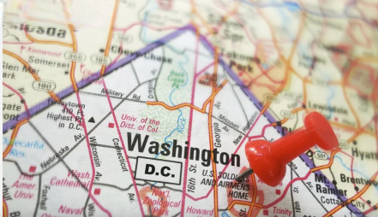
A third of all 8(a) firms are located in the DC Corridor (DC, Maryland, and Virginia), where approximately 40% of all 8(a) sales take place. For some industries, being located near DC is a competitive advantage; for others, it has limited or no impact.
Here’s a state-by-state list with 8(a) sales data to see how 8(a) firms are performing in your state:
1/3
| STATE | ABB | # 8(a) FIRMS | SALES | AVG. SALES |
|---|---|---|---|---|
| Alabama | AL | 134 | 1,000,000,000 | 7,462,687 |
| Alaska | AK | 314 | 5,300,000,000 | 16,878,981 |
| Arizona | AZ | 102 | 337,500,000 | 3,302,984 |
| Arkansas | AR | 19 | 46,500,000 | 2,447,368 |
| California | CA | 410 | 1,700,000,000 | 4,146,341 |
| Colorado | CO | 105 | 776,000,000 | 7,390,476 |
| Connecticut | CT | 17 | 50,500,000 | 2,970,588 |
| Delaware | DE | 8 | 254,955 | 31,869 |
| District of Columbia | DC | 166 | 681,600,000 | 4,106,024 |
| Florida | FL | 356 | 1,500,000,000 | 4,213,483 |
| Georgia | GA | 207 | 570,300,000 | 2,755,072 |
| Guam | GU | 11 | 69,500,000 | 6,318,182 |
| Hawaii | HI | 84 | 814,700,000 | 9,698,810 |
| Idaho | ID | 28 | 208,100,000 | 7,432,143 |
| Illinois | IL | 68 | 177,800,000 | 2,614,706 |
| Indiana | IN | 37 | 51,800,000 | 1,400,000 |
| Iowa | IA | 10 | 18,400,000 | 1,840,000 |
| Kansas | KS | 36 | 128,000,000 | 3,555,556 |
| Kentucky | KY | 18 | 65,900,000 | 3,661,111 |
| Louisiana | LA | 94 | 229,900,000 | 2,445,745 |
| Maine | ME | 12 | 48,100,000 | 4,008,333 |
| Maryland | MD | 657 | 3,900,000,000 | 5,936,073 |
| Mississippi | MS | 39 | 93,600,000 | 2,400,000 |
| Massachusetts | MA | 43 | 105,200,000 | 2,446,512 |
| ichigan | MI | 69 | 294,200,000 | 4,263,768 |
| Minnesota | MN | 22 | 77,800,000 | 3,536,364 |
| Missouri | MO | 50 | 175,700,000 | 3,514,000 |
| Montana | MT | 13 | 102,200,000 | 7,861,538 |
| Nebraska | NE | 27 | 285,800,000 | 10,585,185 |
| Nevada | NV | 37 | 210,300,000 | 5,683,784 |
| New Hampshire | NH | 6 | 30,800,000 | 5,133,333 |
| New Jersey | NJ | 102 | 596,400,000 | 5,847,059 |
| New Mexico | NM | 55 | 224,800,000 | 4,087,273 |
| New York | NY | 85 | 448,700,000 | 5,278,824 |
| North Carolina | NC | 81 | 179,600,000 | 2,217,284 |
| North Dakota | ND | 12 | 157,400,000 | 13,116,667 |
| Ohio | OH | 81 | 217,400,000 | 2,683,951 |
| Oklahoma | OK | 97 | 1,800,000,000 | 18,556,701 |
| Oregon | OR | 35 | 171,800,000 | 4,908,571 |
| Pennsylvania | PA | 101 | 254,000,000 | 2,514,851 |
| Puerto Rico | PR | 69 | 100,300,000 | 1,453,623 |
| Rhode Island | RI | 7 | 16,000,000 | 2,285,714 |
| South Carolina | SC | 58 | 162,300,000 | 2,798,276 |
| South Dakota | SD | 7 | 31,000,000 | 4,428,571 |
| Tennessee | TN | 64 | 201,600,000 | 3,150,000 |
| Texas | TX | 367 | 2,100,000,000 | 5,722,071 |
| Utah | UT | 37 | 107,200,000 | 2,897,297 |
| Vermont | VT | 1 | 1,100,000 | 1,100,000 |
| Virginia | VA | 1,067 | 10,600,000,000 | 9,934,396 |
| Virgin Islands | VI | 4 | 122,210 | 30,553 |
| Washington | WA | 66 | 292,200,000 | 4,427,273 |
| West Virginia | WV | 15 | 178,400,000 | 11,893,333 |
| Wisconsin | WI | 31 | 302,500,000 | 9,758,065 |
| Wyoming | WY | 4 | 14,800,000 | 3,700,000 |
4. Geographical Location
What makes for a good 8(a) JV Partner:
- Medium Sized Federal Contractors, looking to enter a new agency or expand existing business.
- 8(a) Firms that are in their 8th Year that are planning for 8(a) Program Graduation.
- Firms that were prior 8(a) firms looking to get back into the government space.
Great JV Partners
5. Marketing Execution: Skill, Plan and Effort
Three Agency Strategy
Our most successful clients start with only three agencies and then quickly move down to a single agency. They stay focused on this single agency until they are ready to expand into a new agency that they think is a strong fit.
6. Federal Contracting Vehicles
Under the current administration having a GSA Schedule is going to be a “must have” or critical success factor. Additionally other GWACs (Government-wide Acquisition Contracts) such as 8(a) Stars, Oasis, SEWP, Polaris, HCaTS and many other can add millions in sales to an 8(a) Firms bottom line.
8(a) Boosters! = GWACS
7. Federal Past Performance
It is critical that your firm obtained Exceptional and Very Good ratings on all the work you perform for the federal government.
Exceptional (4.0-5.0): Performance meets contractual requirements and exceeds many to the Government’s benefit.
Very Good (3.0-4.0): Performance meets contractual requirements and exceeds some to the Government’s benefit.
Satisfactory (2.0-3.0): Performance meets contractual requirements.
Marginal (1.0-2.0): Performance does not meet some contractual requirements.
Unsatisfactory (0.0-1.0): Performance does not meet most contractual requirements, and recovery is not likely in a timely manner.
From our experience in talking with contracting officers the government on a major contract is typically willing to pay 5-8% more for a client with an Exceptional ranking over one with a Very Good ranking. Therefore protect your margins and always do a great job!
Excellence Matters
Ready or Not Ready Yet for 8(a)? We Can Help!
As there are many intricacies to the 8(a) Certification, calling us is always the best way to make sure you qualify or to learn what you need to do in order to meet the 8(a) qualifications. Call us at 859-442-3300 for a 10-minute qualifying call or use our prequalification tool (below) for a preliminary check.
Interested? Qualify Yourself
in 3 Minutes Using Our Tool
8(a) Package
Find out about our 8(a) Certification Package
Social Disadvantaged
Is the 51% owner(s) of the firm U.S. Citizens....
Do you have one of the following:
- Do you consider yourself white, meaning that 50% or more of your blood heritage is Caucasian?
- 25% or more of your blood heritage is from a minority group?
- Have a tribal card from a state or federally recognized Native American Indian Tribe?
- Are you a woman who has suffered substantial and chronic gender bias?
- Are you disabled, born before 1990, and have experienced material harm as a result of discrimination?
- Are you a Middle Eastern American who has suffered substantial and chronic racial bias?.........
Ok then, are you a woman who has suffered substantial and chronic gender bias, or disabled, born before 1990, and have experienced material harm as a result of discrimination, or a Middle Eastern American who has suffered substantial and chronic racial bias?.....
Economically Disadvantage
Has the owner of the firm made more than $400,000 per year, on average, for the past 3 years.
Is the owner’s net worth less than $850,000 excluding (a.) the owner’s primary residence, (b.) the business applying for 8(a) (c.) the owners retirement accounts.
Is the owners’ total assets less than $6,500,000 excluding retirement accounts.
Potential to Succeed at Federal Contracting
Does the owner of the firm work full-time for the business; meaning Monday-Friday from 9am-5pm.
Did the firm make a profit on its most recent tax return.
Does the firm have a positive net worth.
Has the firm been in business for at least two-years?, meaning the business has filed two tax returns with revenue on both. -or- Two-year waiver: Has the firm had at least $150,000 in revenue since the inception of the firm as well as a profit on the fi
Has the firm obtained more than 70% of the firm’s revenue from a single source? This calculation is for the most recent calendar year to the date of the 8(a) application.
Control Issues
Is the owner of the firm the one managing the day-to-day operations, long-term strategic planning, and the highest compensated person at the firm.
8A PROGRAM NARRATIVE CHANGE
Recent changes to the 8(a) Social Disadvantage Narrative now make it possible for White/Caucasian applicants to qualify – creating a more complex application, but also a more level playing field
8(a) Major Changes - Social Disadvantage Narrative (What You Need to Know!)
New SBA Guidance (Effective 9/10/2026): Four Ways to Establish Social Disadvantage
Effective September 10, 2026, SBA’s new final rule (13 CFR 124.103) replaces the old subjective personal narrative test with a new objective, fact-based standard. Starting no earlier than that date, SBA will return pending individual 8(a) applications so applicants can re-establish social disadvantage under the new standard. Current, already-admitted 8(a) participants do not need to reestablish social disadvantage status, now or during future annual reviews.
Under the new standard, an applicant must show that an identifiable racial, ethnic, or cultural group suffered discrimination or bias, attest they were a member of that group at the relevant time, and attest they suffered material harm as a result. There are four main paths to meet this standard:
1. Ultima Servs. Corp. v. USDA (2023) – White/Caucasian applicants can now qualify. A federal court found SBA’s prior “rebuttable presumption” – which presumed only Black Americans, Hispanic Americans, Native Americans, Asian Pacific Americans, and Subcontinent Asian Americans were socially disadvantaged – unconstitutional. Applicants outside those previously-presumed groups can use this ruling as evidence of discrimination, and do not need to have previously applied to or been rejected from the 8(a) program if they were dissuaded from applying because of it.
2. Discrimination from an employer’s race- or gender-based quotas. Applicants of any race who were disadvantaged by a prior employer’s unlawful race- and/or gender-based hiring quotas or similar policies may qualify, supported by evidence such as court rulings, government findings, or enforcement actions/settlements (e.g., DOJ findings against an employer for demographic-based hiring targets).
3. Americans with disabilities. Applicants may qualify if they (1) have an identifiable disability covered under the Americans with Disabilities Act and were born before 1990, and (2) experienced material harm as a result of discrimination against people with disabilities – supported by Congress’s own findings when it passed the ADA in 1990.
4. Traditional minority narrative – now with required evidence. Minority applicants may still submit a narrative describing discrimination they personally experienced – for example from unlawful DEI programs, affirmative action policies, race-based quotas, set-asides, or hiring targets. The key change: narratives must now be backed by evidence, not personal statements alone. Our recommendation is at least two documented incidents, each supported where possible by a contemporaneous record (such as an email) or, where that isn’t available, a signed affidavit from someone with firsthand knowledge of the incident.

The SBA’s new social disadvantage standard requires real, documented evidence – not just a personal story. Let ez8a help you build a narrative that meets the new standard.
Impact on Super 8(a)s
This SBA program change does not impact entity-owned firms, such as firms owned by Indian tribes, Alaska Native Corporations, Native Hawaiian Organizations, or Community Development Corporations. These firms will not need to submit social disadvantage narratives.
Impact on Current 8(a) Contracts
This program change does not impact current contracts and agencies are free to exercise contract options.
Impact on Annual Review
There is no impact on your Annual Review.
SBA FAST-TRACKS DEFENSE-CRITICAL 8(a) APPLICANTS
On September 10, 2026, SBA also announced it will prioritize and expedite processing for 8(a) applicants in defense-critical industries, while reinstating mandatory “potential for success” financial and business evaluations for all applicants.
Is your firm defense-critical? SBA has identified ten specific NAICS industry codes that qualify for expedited review:
- 332992 – Small Arms Ammunition Manufacturing
- 332993 – Ammunition (except Small Arms) Manufacturing
- 336414 – Guided Missile and Space Vehicle Manufacturing
- 336413 – Other Aircraft Parts and Auxiliary Equipment Manufacturing
- 334511 – Search, Detection, Navigation, Guidance, Aeronautical, and Nautical System and Instrument Manufacturing
- 334419 – Other Electronic Component Manufacturing
- 331110 – Iron and Steel Mills and Ferroalloy Manufacturing
- 332710 – Machine Shops
- 332999 – All Other Miscellaneous Fabricated Metal Product Manufacturing
- 336611 – Ship Building and Repairing
If your firm operates under one of these NAICS codes, call us to find out how to take advantage of expedited 8(a) processing.
Already have a pending application? If your 8(a) application was pending as of September 10, 2026, SBA is returning it so you can update it under the new standard – you have 45 days from September 10 to resubmit. That deadline is October 25, 2026. Don’t let your place in line lapse – call us now to get your resubmission handled before the window closes.