For all states the Disadvantaged Business Enterprise (DBE) process is similar. This is because the DBE program is a federal program that is administered by the 50 U.S. states. The firm must register individually with each state as a DBE in order to be certified with that state.
The process for obtaining a DBE certification is similar to the 8(a) certification process with many of the same restrictions for certification. The business owner will be checked for independence in making decisions for the firm. The business owner must also be active in the day-to-day operations of the firm.
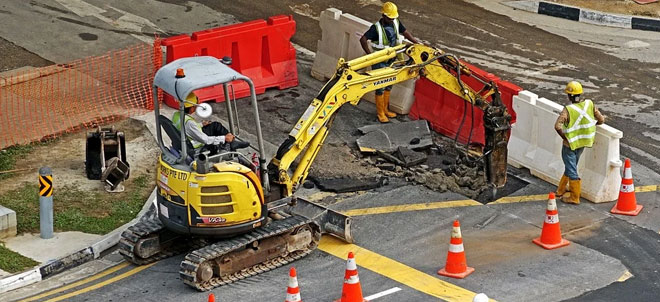
Most states utilize their department of transportation for certification because the majority of work in which DBE’s perform is working on roadway construction, airport services and airport construction. The following are some of the criteria that are key elements for becoming DBE certified.
IMPORTANT: On September 25, 2026, DOT finalized new DBE/ACDBE eligibility rules. The old race- and sex-based presumptions of disadvantage are gone — every applicant now needs an individualized Personal Narrative, and current DBE/ACDBE holders must go through a reevaluation. States generally must finish reevaluations within 90 days of the rule (about December 24, 2026), and firms that have not submitted an updated narrative and personal net worth statement by about March 24, 2027 face automatic disqualification. Call us to make sure your firm — new applicant or current holder — is ready.
| DBE | ACDBE – airport (i.e. concessions) | |
|---|---|---|
| Ownership & Control | At least 51% of the enterprise must be owned and controlled by a socially and economically disadvantaged individual(s) | At least 51% of the enterprise must be owned and controlled by a socially and economically disadvantaged individual(s) |
| Qualifying Owner’s Personal Net Worth Limit: | Less than $2,047,000, excluding retirement assets and the value of the business. Primary residence is fully excluded (50% if the owner lives with a spouse or domestic partner). | Less than $2,047,000, excluding retirement assets and the value of the business. Primary residence is fully excluded (50% if the owner lives with a spouse or domestic partner). |
| Size Standards | Vary State by State (see below) | Vary State by State (see below) |
| Type of Business | Any for-profit business that is independent working as either a primary or subcontractor. | Any for-profit business that is independent working as either a primary or subcontractor. |
| Type of Contract | Federal DOT funded contracts (highway, bridge, airport or other transit projects) | Airport facility concessions contracts |
| Participation Goals | DBE goals are set on a per-contract basis. | ACDBE goals are set on a per-contract basis. |
| Who can apply | Any individual who can show, through an individualized Personal Narrative, that they are socially and economically disadvantaged based on at least one objective distinguishing feature (race, ethnicity, sex, or disability). As of September 25, 2026, DOT no longer presumes disadvantage based on race or sex alone. | Any individual who can show, through an individualized Personal Narrative, that they are socially and economically disadvantaged based on at least one objective distinguishing feature (race, ethnicity, sex, or disability). As of September 25, 2026, DOT no longer presumes disadvantage based on race or sex alone. |
| On-site Inspection | Required for most in-state located firms | Required for most in-state located firms |
| Years in business required to apply | Business must be actively working in for-profit activity | Business must be actively working in for-profit activity |
| Franchise Eligibility | Franchises are ineligible for this program | Franchises are ineligible for this program |

Package Details
Our DBE Certification Package includes the following:

- We ask you over 75 questions in a free initial consultation to ensure we do not waste your time or energy on a project that does not have a high likelihood of success.
- We will send you a checklist of the items that we need in order to complete your DBE application.
- We have a team of analysts who will work on your DBE application immediately upon submission to us. Submitting the document checklist to us will immediately get your DBE application moving towards certification.
- We will very thoroughly inspect every item you submit for any potential problems. The DOT at most states has strict federal guidelines they must follow in order to complete your application.
- We will communicate with you (by email and phone) all the way through the DBE application process so you will never be left wondering where your application is in the process.
- A professional writer conducts interviews with you to prepare the economically and socially disadvantaged narrative(s) if required. These narratives can make or break a DBE application.
- We will compile the entire application, double-checking all documents to be submitted to be certain it meets all DBE guidelines. The DBE application package (usually 3 -4 inches thick) will be provided in a binder with a table of contents and tabs for every DBE section. The package is accompanied by a cover letter.
- Finally, we will label all the locations in the DBE application where a signature is necessary and will send the completed DBE package to you so you can sign and forward it to your state’s certifying agency.
- When we send it, your DBE certification application is ready for the State DOT to review.
New DOT Standard, Effective September 25, 2026
DOT finalized a new rule that eliminates the old race- and sex-based presumptions of disadvantage in the DBE and ACDBE programs. Every applicant must now submit an individualized Personal Narrative showing they are both socially and economically disadvantaged — demographic presumptions are no longer enough on their own, but you may still describe your own experiences of discrimination based on race, ethnicity, sex, or another factor as evidence supporting your narrative.
Key Elements to the narrative include:
- Identifying at least one objective distinguishing feature (such as race, ethnicity, sex, or a disability) that forms the basis of your disadvantaged status
- Explaining how that characteristic caused you economic hardship, social barriers, or denied opportunities
- Comparing your circumstances to a non-disadvantaged individual with comparable qualifications
- Showing that your business is economically disadvantaged in fact, not just below the personal net worth cap
Ez8a Narrative Services:
- Ez8a will send templates and guidelines to the applicant for an understanding of how the certifying agency wishes to see the narrative formatted and in order to get their rough draft started.
- Ez8a will review the clients rough draft narrative for accuracy and provide feedback, commentary, edits, and suggestions to the applicant regarding their rough draft.
- Ez8a will then include the owner’s feedback from the review to finalize the narrative and assist the client with answering any follow up questions from the certifying agency in the rare occurrence they ask for additional information pertaining to the narrative.